
Is your RC roof leaking or showing cracks and water stains on the ceiling below?
In Singapore’s heavy rain and intense heat, a flat concrete roof takes a beating every single day. Without proper waterproofing, water gets in, the concrete weakens, and repairs get expensive fast.
Allseal is a BCA-registered RC roof waterproofing specialist in Singapore. We fix it properly, and we make it last.
There are a lot of waterproofing contractors in Singapore.
So why do so many homeowners, condo managers, and commercial property owners keep coming back to Allseal?
Here’s the honest answer.
Yes, both. And here’s why that matters to you.
BCA registered means our materials and methods meet Singapore’s official building standards. Your HDB, MCST, or insurer will accept our documentation without issue.
BizSAFE certified means our team follows proper safety practices when working on your roof. Roof work is done at height. You don’t want a contractor cutting corners on safety at your property.
Not every contractor in Singapore holds both. We do.
Over 10 years.
In that time, we’ve waterproofed roofs on HDB blocks, landed homes, condominiums, and commercial buildings all over Singapore. We’ve seen every type of RC roof failure, and we know exactly how to fix each one properly the first time.
Yes, free, no obligation, same-day response available.
Our specialist visits your property, inspects the roof condition from top to bottom, and gives you an honest written recommendation. No pressure to proceed.
Most people don’t think about their roof until water is dripping through the ceiling.
By then, the damage is already bigger and more expensive than it needed to be.
Let’s explain what’s actually happening up there.
RC stands for Reinforced Concrete. Concrete roof waterproofing in Singapore is not optional. It’s the most common roof type on HDB blocks, landed homes, condos, and commercial buildings everywhere.
Here’s something most people don’t know. The reinforced concrete slab looks solid, but it’s actually porous. It has tiny gaps throughout its structure. In Singapore’s heavy rain, water slowly works its way through those gaps, weakens the concrete, and starts corroding the steel reinforcement inside.
Once that process starts, things go downhill fast:
A proper waterproofing membrane sits on top of the slab and stops all of this before it starts.
Let’s be straight about this. A roof leak doesn’t fix itself. Here’s what happens the longer you leave it:
Timeline | What Happens |
Early stage | Hairline cracks appear, minor water seepage begins |
6–12 months | Water reaches the steel inside – corrosion starts |
1–2 years | Ceiling stains, visible leaks, concrete spalling |
2+ years | Serious structural damage, major repair cost |
Your roof doesn’t just suddenly fail one day.
It breaks down slowly over time, and Singapore’s weather makes it happen faster than you’d think. That’s why many property owners eventually need help from a Waterproofing Specialist in Singapore to properly diagnose the root causes before the damage becomes severe.
If rainwater sits on your flat roof for hours, it finds every tiny crack and gap and forces its way through.
Signs you have a ponding problem:
Good waterproofing and proper drainage together solve this. Flat roof waterproofing in Singapore alone isn’t enough if the water has nowhere to go.
Yes, it does. Many people don’t realise this.
Every day, your roof gets very hot under the sun. At night, it cools down. This heating and cooling happen again and again for many years. Because of this, the concrete slowly expands and shrinks.
Over time, small hairline cracks start to form on the roof surface.
These cracks may look very small. But they are big enough for rainwater to seep in.
That’s why waterproofing must be flexible. If the coating is too hard, it will crack along with the concrete. A flexible waterproof layer can move with the roof and stay sealed.
Yes, even a perfectly installed membrane doesn’t last forever in Singapore’s climate.
Singapore’s UV radiation is intense. Over the years, it breaks down the surface of the membrane, making it brittle, less flexible, and eventually cracked. This is called membrane fatigue. Once a membrane is fatigued, it lets water through even if it looked fine a year ago.
The good news? If you catch membrane fatigue early, a simple recoat or overlay is enough. Wait too long, and you need a full membrane replacement, which costs significantly more.
Honestly, yes. This is more common than people realise.
The number one cause of early waterproofing failure is poor surface preparation. If the concrete isn’t properly cleaned, dried, and primed before the membrane goes on, it won’t bond to the surface. Water gets behind it. It peels. It fails within a year or two.
This is why we never rush the preparation stage. Everything else depends on getting this right.
We don’t guess. We always diagnose first, properly.
When our specialist is on your roof, here’s what actually happens:
What We Check | Why We Check It |
Moisture mapping | Find hidden wet areas in the slab not visible to the eye |
Crack inspection | Identify hairline and structural cracks across the surface |
Water ponding test | Check drainage and identify low spots where water collects |
Substrate testing | Check if the existing surface will bond to a new membrane |
Drainage evaluation | Make sure water has somewhere to go after waterproofing |
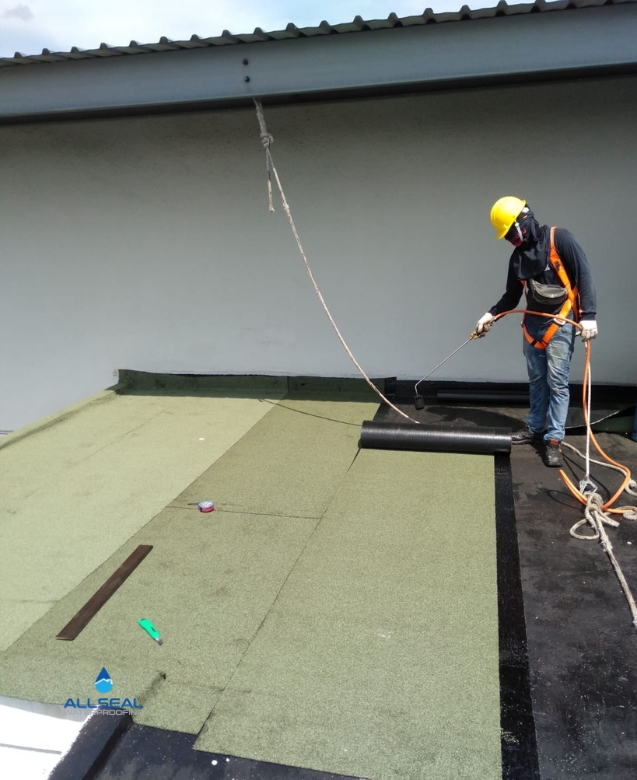
Different roofs need different solutions.
Here’s an overview of the main systems we use.
Torch-on membrane, also called torch-applied bituminous membrane, is a thick and strong waterproof sheet. It is heated with a gas torch and melted onto the concrete surface so it sticks firmly.
Think of it like a tough, waterproof blanket that is sealed tightly onto your roof.
Good for:
Typical lifespan: 10–15 years
One important thing: The roof surface must be prepared properly first. Sometimes the old membrane needs to be removed. This system must be installed by trained specialists because the heating process must be done carefully and correctly.
Liquid PU (polyurethane) membrane is applied like paint – rolled or sprayed onto the roof surface in multiple coats. It cures into a seamless, flexible waterproof layer that covers the entire roof, including edges, corners, and pipe penetrations.
Why it’s great:
Typical lifespan: 8–12 years
Best for: Roofs with complex layouts, many pipe penetrations, or where a no-hacking overlay is the preferred approach.
This is for roofs that get regular foot traffic, like accessible roof terraces, communal roof gardens, or commercial rooftops where maintenance teams walk regularly.
A hybrid system puts a strong protective screed or coating layer over the waterproofing membrane – protecting it from being damaged by foot traffic while keeping the waterproof barrier intact underneath.
We decide based on your specific situation, not what’s easiest for us.
Your Situation | What We Recommend |
Membrane has completely failed | Full replacement – torch-on or liquid PU |
Membrane is fatigued but still bonded | No-hacking overlay system |
Complex roof shape with many penetrations | Liquid PU for seamless coverage |
High foot traffic roof area | Hybrid reinforced system |
Budget is a key consideration | We present honest options at different price points |
Here’s exactly what happens from start to finish, so you know what to expect.
Step 1
We clean the entire roof properly - removing dirt, algae, loose material, and any failed existing membrane. This step takes time, and we never rush it. Everything else depends on this being done right.
Step 2
Every crack gets filled and sealed using crack injection repair compounds before the membrane goes on. We don't cover over cracks - we fix them first.
Step 3
A bituminous primer or PU primer is applied to the prepared surface. This is the bonding agent that makes the membrane stick permanently to the concrete. No primer means no proper bond.
Step 4
We apply the chosen system - torch-on membrane or liquid PU waterproofing membrane. Joints, corners, edges, and pipe penetrations all get extra careful treatment. These are the spots where water most commonly finds a way in.
Step 5
Where needed, a UV-resistant coating or protective screed is applied over the membrane to protect it from Singapore's intense sun and physical damage.
Step 6
We block the roof drains, flood the surface with water, and leave it for 24–48 hours. If the water level holds, the waterproofing is confirmed as working. We don't sign off on the job until this test passes.
This is one of the most common questions we get.
The honest answer is that it depends on the condition of your existing roof.
Full hacking is needed when:
No-hacking overlay works when:
| No-Hacking Overlay | Full Hacking |
Disruption | Low – minimal mess | High – debris and dust |
Cost | Lower | Higher |
Time | 1–2 days | 3–5 days |
Best for | Fatigued but bonded membrane | Fully failed or delaminated membrane |
Lifespan | 8–10 years | 10–15 years |
Honestly, the cost depends on your roof’s condition and what it actually needs, but here’s a clear breakdown so you know what to expect.
The cost depends on a few simple things.
System | Approximate Cost Per m² |
Liquid PU waterproofing membrane | $18–$35 per m² |
Torch-on membrane | $25–$45 per m² |
Hybrid reinforced system | $35–$60 per m² |
Add for full hacking | +$15–$25 per m² |
Every RC roof waterproofing job we complete comes with a written workmanship warranty. If the waterproofed area leaks again within the warranty period, we come back and fix it at no extra cost. That’s in writing, not just a verbal promise.
We also only use BCA-approved waterproofing systems with manufacturer product warranties. So you’re covered on both workmanship and materials.
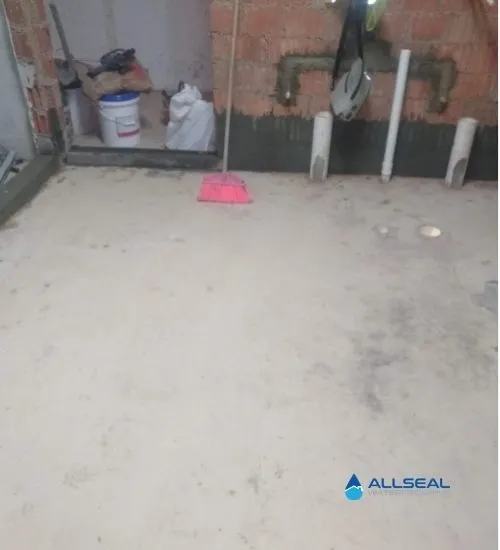
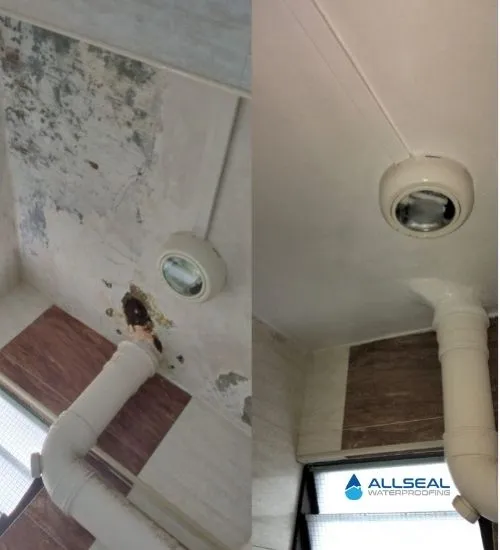
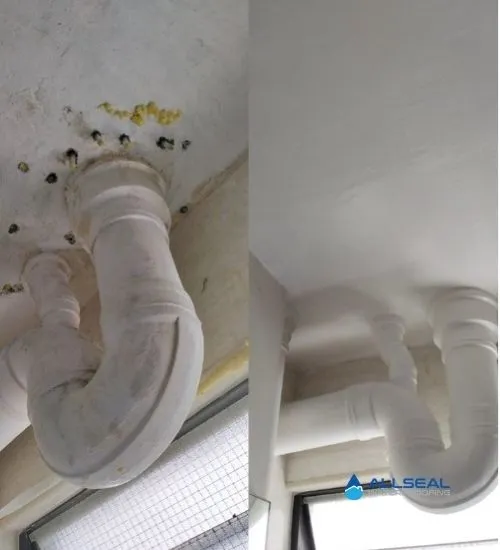
At Allseal Waterproofing PTE Ltd, our goal is to give our clients the best service possible. Here’s some feedback from our happy customers:

“I had a persistent water leak in my bathroom, and their team fixed it quickly and efficiently. They explained everything clearly and used high-quality materials. Now, my bathroom is completely dry, and I no longer worry about water damage. Highly recommend their service!”
kelvin

“I was impressed by how fast they responded to my request. The team arrived on time, found the source of the leak, and repaired it without any hassle. The pricing was fair, and they even gave me tips to prevent future leaks. Great service!”
Edmund

“They did an amazing job fixing the leak in my bathroom. The team was friendly, professional, and very knowledgeable. They took the time to ensure everything was properly sealed and tested. I will definitely call them again if I ever need plumbing repairs!”
Williams
Torch-on membrane typically lasts 10–15 years. Liquid PU systems last around 8–12 years. How long it actually lasts depends heavily on the quality of surface preparation and how well the roof drainage is maintained after installation.
Not always. It works great on flat, accessible roofs with simple layouts. For complex shapes or roofs with many pipe penetrations, liquid PU is often the better choice. We recommend based on your specific roof, not what’s quickest for us to apply.
Yes, but only if the existing membrane is still properly bonded to the concrete. We test adhesion first every time. If it’s delaminated, we tell you honestly that hacking is needed. We don’t apply an overlay over a surface that won’t hold it.
Usually blocked drains, inadequate drainage design, or a roof surface that has settled unevenly over time. Ponding needs to be solved alongside waterproofing – fix the drainage and waterproof the surface together. Doing only one without the other won’t last.
Roughly $18–$60 per m², depending on the system and condition. A typical landed home roof costs $3,000–$8,000. We give you a clear fixed price after a free inspection.
Most residential jobs take 2–4 days. Larger commercial roofs take longer. We always give you a clear timeline at the quotation stage so you can plan around it.
Yes, completely free, no obligation. We visit, assess your roof properly, and give you an honest written recommendation. No pressure to proceed.
Don’t wait for the next rainy season to find out your roof has a problem.
Book your free RC roof inspection today.
BCA registered · BizSAFE certified · Written warranty · Transparent pricing.
Allseal Waterproofing PTE Ltd, your trusted partner for all waterproofing needs. Based in Singapore, we provide expert solutions for leaks and dampness. Contact us for unparalleled service.