
Is your roof ready for Singapore’s intense tropical downpours? With around 2,340mm of rainfall a year, humidity often above 80%, and constant UV exposure, choosing the right roofing material and the right waterproofing method is one of the biggest decisions you’ll make for your property. A good roof isn’t just about looks — it’s about keeping your home dry and safe from leaks, mould, and costly repairs.
This guide covers the best roofing materials for waterproofing in Singapore, the leading waterproofing solutions for each roof type, how to repair a roof that’s already leaking, the DIY-vs-professional decision for metal roofs, and concrete-roof-specific waterproofing options — plus expert maintenance tips to keep your roof watertight for decades.
Why Waterproofing Your Roof Matters in Singapore
Singapore’s climate presents constant challenges for any roof:
- Heavy rainfall: About 2,340mm of rain a year means your roof is constantly battling water.
- High humidity: Levels often exceed 80%, encouraging mould and mildew if the roof isn’t properly sealed.
- Intense sunlight: Constant UV exposure wears down roofing materials faster over time.
- Occasional storms: Strong winds and heavy downpours can physically damage roofing structures.
Neglecting waterproofing can lead to water leakage and structural damage, reduced energy efficiency (higher cooling costs), faster deterioration of building materials, mould-related health hazards, and a lower resale value for your property.
Top Roofing Materials for Waterproofing in Singapore
Metal Roofing
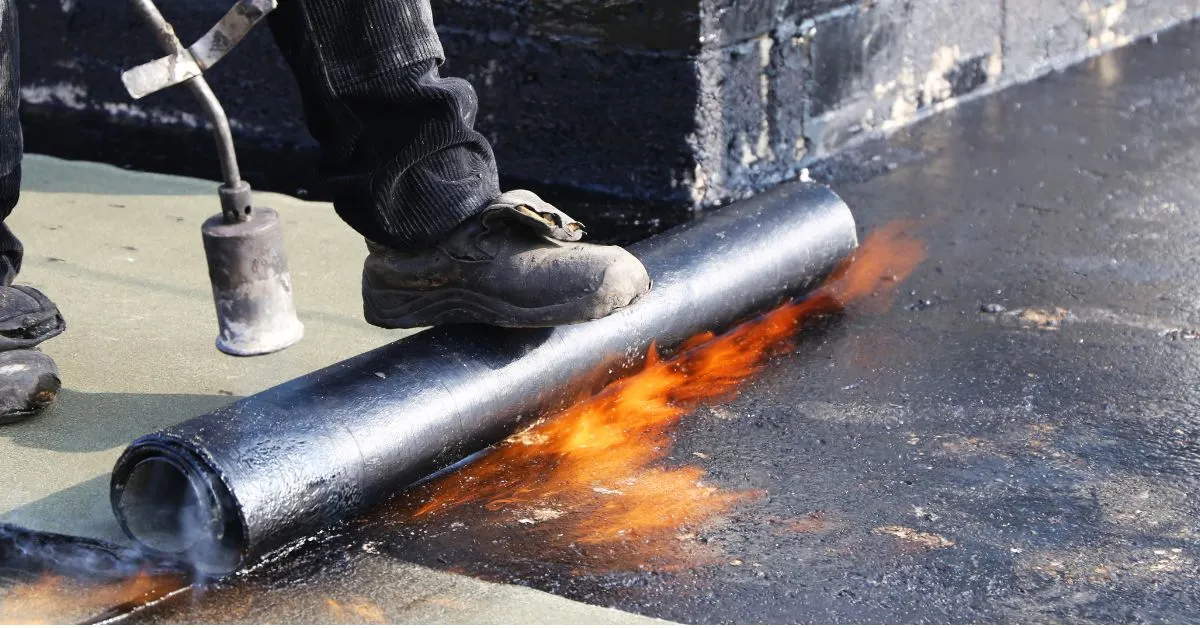
Popular thanks to durability and water-resistant properties: lightweight and easy to install, can last up to 50 years with minimal maintenance, naturally resists water penetration, and reflects heat to help reduce energy costs. Our metal roof waterproofing service covers repair and re-coating for metal roofs.
Concrete Roofing
Strong and able to handle Singapore’s weather: can last 50+ years with proper maintenance, naturally fire-resistant, offers good thermal insulation, and can be reinforced for extra strength against heavy rain. For concrete roof slabs, our RC roof waterproofing specialists handle cracks, ponding and failed membranes.
Tiled Roofing
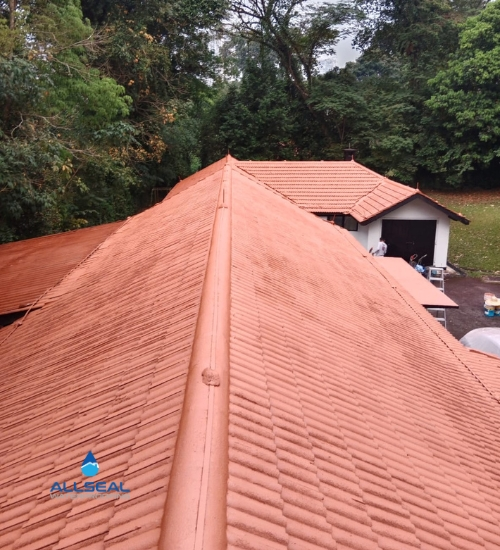
Combines style with function: available in many styles and colours, naturally sheds water to help prevent leaks, offers good insulation, and can last 30 to 50 years when properly maintained. We also offer pitch clay tile roof waterproofing for tiled roofs.
Green Roofing
An eco-friendly option growing in popularity: absorbs and filters rainwater to reduce leak risk, reduces the urban heat-island effect, improves air quality, and supports biodiversity — though it needs more maintenance (roughly 40+ year lifespan).
| Roofing Type | Waterproofing Effectiveness | Lifespan | Maintenance |
|---|---|---|---|
| Metal | Excellent | 40–50 years | Low |
| Concrete | Very Good | 50+ years | Moderate |
| Tiled | Good | 30–50 years | Moderate |
| Green | Good | 40+ years | High |
Best Waterproofing Solutions by Roof Type
Liquid Waterproofing Membrane
Applied with a brush, roller, or spray to create seamless, gap-free coverage. Especially useful for flat roofs and complex shapes with many penetrations, since it forms a flexible layer that adapts to the roof’s movement and temperature changes.
Polyurethane (PU) Waterproofing
Highly elastic, UV-resistant, and chemical-resistant — suited to both flat and sloped roofs, especially high-traffic areas or where mechanical equipment sits. Seamless application eliminates weak points, cures quickly, and can last up to 25 years with proper maintenance.
Bituminous Waterproofing
A long-trusted, cost-effective method known for strong adhesion, some self-healing properties, and resistance to weathering. Especially suited for concrete roofs, applied in sheet or liquid form.
Cementitious Membrane
A mixture of cement and acrylic materials, popular for its affordability and ease of application. It can crack over time since cement isn’t very flexible and roofs expand and contract with temperature — best suited to flat concrete roofs or low-traffic interior areas.
Sheet Membrane
Typically rubberised asphalt with a self-adhesive backing, giving consistent thickness and reliable coverage. It costs more per square foot and the installation (cutting, handling, securing sheets) adds labour cost.
Liquid Applied Membrane (LAM)
A top choice for tiled or concrete roofs — covers every part of the roof with no seams or gaps, spreads easily, and is especially effective at sealing corners and gaps that sheet membranes can miss. Needs expert application since a too-thin layer can tear; the Cold Spray Application technique lets experts cover large areas roughly three times faster than other methods.
Factors to Consider When Choosing a Roof and Waterproofing Method
Durability and Longevity
Metal roofing, properly waterproofed concrete, tiled roofs with waterproof underlayment, and bituminous or PU membranes all offer strong resistance to UV rays and Singapore’s humidity — reducing how often you need repairs.
Cost of Installation and Maintenance
| Waterproofing Method | Initial Cost | Maintenance Cost |
|---|---|---|
| Bituminous Membrane | Moderate | Low |
| Polyurethane Liquid | Higher | Moderate |
| Cement-based | Lower | Higher |
Aesthetic Appeal
Green roofs offer a unique eco-friendly look; tiled roofs give a traditional, elegant appearance; metal roofing suits modern, sleek buildings; and liquid membranes preserve your existing roof’s appearance since they don’t alter it visually.
Energy Efficiency
Reflective coatings minimise heat absorption, green roofs provide natural insulation, and proper insulation generally helps stabilise indoor temperatures — all reducing reliance on air conditioning.
Concrete Roof Waterproofing: Methods, Costs, and FAQs
For concrete roofs specifically, four waterproofing methods are most common in Singapore: cementitious membrane, sheet membrane, Liquid Applied Membrane (LAM), and bituminous coating (see descriptions above). Bituminous coating in particular uses bitumen (derived from crude oil), often modified with polymers like polyurethane or acrylic for added flexibility, and is prized for its strong resistance to UV rays and corrosion.
Concrete Roof Waterproofing FAQs
How much does it cost to waterproof a roof in Singapore?
Typically S$118 to S$200 per square metre, though it can exceed S$250 per square metre in some cases.
How long does waterproofing on a concrete roof last?
Usually 20 to 25 years when done properly.
How often should you waterproof your concrete roof?
On average once every 5 years — sooner if you notice cracks or tears on the surface.
Can you waterproof a concrete roof yourself?
Yes, but it’s unlikely to last as long without professional experience. Hiring a specialist generally gives a longer-lasting result.
DIY vs Professional Waterproofing for Metal Roofs
Without proper waterproofing, metal roofs can develop leaks and rust that compromise both durability and safety. When deciding between DIY and hiring a professional, weigh these trade-offs:
DIY Waterproofing
Benefits: Saves on labour costs, materials are easy to find in stores or online, and you control the pace and choice of materials.
Challenges: Applying sealants or coatings correctly takes real skill — get it wrong and the roof may still leak, costing more to fix later. Choosing the right product for Singapore’s hot, rainy climate is difficult without expert knowledge, working at height carries real safety risk, and DIY coatings typically need reapplying more often than professional work.
Professional Waterproofing
Benefits: Professionals can spot early-stage issues like rust or cracks that homeowners might miss, use higher-quality materials and tools, finish faster, and often back the work with a warranty.
Drawbacks: Higher upfront cost, and it can take research to find a contractor whose quality matches their price — especially during busy, rainy-season periods.
How to Decide
If your roof has only minor issues and you’re confident in your own skills, DIY can work. For an older roof or more severe damage, a professional is usually the safer and more cost-effective choice long-term. Consider your roof’s condition, your budget (mistakes cost more to fix later), and how much time and effort you’re willing to invest.
When you do hire a professional, expect them to first inspect the roof for damage, leaks, or weak spots, recommend a solution with a clear cost estimate, apply sealants or coatings to cover every part of the roof (sometimes using thermal imaging to find hidden leaks), and provide a warranty plus maintenance advice afterward.
10 Proven Ways to Repair a Leaking Roof
If your roof is already leaking, here are the most common repair methods, from simple to professional-grade:
- Seal the pipe with a rubber collar: For leaks around a roof pipe, slide a rubber collar over the cracked pipe boot to reseal the gap between the pipe and roof.
- Repair roof gaps with sealant: Lift the shingle around a problem nail, remove it, apply roofing cement over the hole, and press the shingle back — add a waterproof membrane for extra protection if needed.
- Replace damaged shingles and flashing: Remove old shingles and flashing around chimneys or vents, check the decking underneath for water damage, add an ice-and-water shield, then install new shingles and flashing.
- Unclog your gutters: Clear debris, check for cracks or holes and patch with roofing cement, and clean gutters at least twice a year (around fall and late spring) to prevent water from backing up into the roof.
- Protect chimney joints with water-repellent seals: Replace old flashing around the chimney, add a waterproof barrier, and apply a masonry water-repellent seal to any cracked mortar joints.
- Fix skylight leaks with a cladding kit: Remove the old flashing, add a water shield, and reinstall the cladding kit for a watertight seal.
- Cover leaks temporarily with a tarp or polyethylene sheet: A short-term fix to block further water ingress while you arrange a permanent repair.
- Seal small holes with caulk or silicone: Works for minor holes in shingles, flashing, or around chimneys.
- Use roofing tape to patch minor leaks: Apply adhesive-backed roofing tape from the attic side — effective for small leaks in dry weather.
- Hire a roof waterproofing specialist: For anything beyond minor patches, a specialist has the skills and tools to deliver a permanent fix.
Benefits of Metal Roof Waterproofing
Waterproofing a metal roof every 5 to 10 years protects your property in several important ways:
- Eliminates leakage: Seals your roof tightly against rain and wind-driven water around chimneys and vents.
- Prevents moisture damage: Stops condensation from causing rust and corrosion inside the metal, which weakens the roof over time.
- Avoids installation problems: Waterproofing before adding new fixtures like vent pipes or chimneys prevents leaks around those new penetrations.
- Prevents blisters and bubbles: Stops trapped gas, air, and water from forming bubbles that eventually break open and let water seep further in.
- Improves appearance: Hides dents and cracks from an older roof, keeping both the exterior and interior looking clean.
- Reduces asbestos exposure risk: For older roofs containing asbestos, waterproofing seals cracks and holes that could otherwise release fibres — this work should be handled by an experienced specialist.
- Keeps interiors cooler: Reflects sunlight, helping reduce indoor temperatures and air-conditioning costs during Singapore’s hot weather.
- Keeps mould and mildew away: Removes the damp conditions that let fungal growth take hold.
- Adds property value: A waterproofed roof signals a well-maintained building to future buyers or tenants.
- Other benefits: Longer roof lifespan, less water pollution from leaking runoff, better handling of heavy rain overflow, and most waterproofing materials used are recyclable.
Expert Maintenance Tips
Regular Inspections
Check your roof roughly every six months: look for cracks, holes, or pooling water; clear gutters and downspouts of debris; look for water stains or bubbling paint inside that signal a developing leak; and trim overhanging tree branches that could cause damage. Before the monsoon, our guide to preparing your roof for the rainy season walks through the full checklist.
Choosing the Right Contractor
| Factor | Why It Matters |
|---|---|
| Credentials | Verify licenses and certifications |
| Reputation | Check reviews and past project experience |
| Warranty | Look for a 5–10 year warranty |
| Specificity of Quotes | Insist on detailed, itemised estimates |
Address Small Issues Early
Repair small cracks or leaks immediately, replace missing or damaged tiles promptly, reapply waterproofing coatings on the recommended schedule, and deal with mould or mildew as soon as you spot it — catching issues early saves significantly on larger repairs down the line.
Conclusion
Choosing the right roof and waterproofing method for Singapore’s climate comes down to balancing durability, cost, and maintenance needs against your building’s specific condition — whether that’s a metal roof, concrete roof, or tiled roof. Regular inspections and timely repairs preserve your roof’s integrity for years, while professional waterproofing (whether full re-coating or repair of an active leak) protects your property’s value and your family’s health.
At Allseal Waterproofing, we understand the unique challenges posed by Singapore’s tropical climate and help property owners select and install the right waterproofing solution for every roof type — metal, concrete, or tiled. Don’t wait for leaks to show up: get your roof assessed today and keep your home safe, dry, and ready for whatever Singapore’s weather brings.