
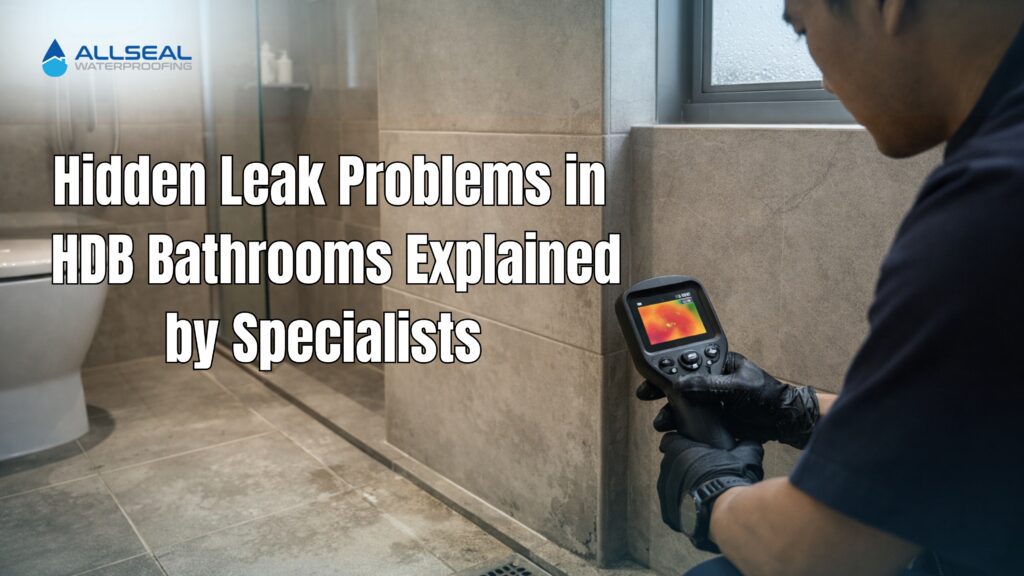
If you stay in a flat under the Housing & Development Board (HDB), bathroom leaks are not rare. Many of them stay hidden for months. You only notice when the ceiling downstairs starts to stain. Or your tiles feel damp all the time. These problems can turn serious quickly. That is why you should learn about the hidden leak problems in HDB bathrooms, explained by specialists in this field. They deal with these cases every day and know exactly where leaks start and how they spread.
Experts can detect —
- concealed pipe leaks inside walls,
- failed waterproofing under tiles,
- loose floor traps,
- cracked grout,
- and toilet seal issues before damage becomes worse.
They also handle inter-floor leakage cases between neighbours.
Now, let’s walk you through what specialists in Singapore discuss these hidden leak issues, how they diagnose the problem, how they repair it, and what the repair costs typically look like, based on local data sources.
Why Hidden Bathroom Leaks are Common in HDB Flats
Bathrooms in HDB flats are wet areas. Water hits the floor daily. Steam builds up. Pipes run inside walls and floor slabs. Over time, small failures turn into hidden leaks.
According to the Ministry of National Development, around 21 ceiling leakage complaints per 1,000 HDB flats were received each year (2014–2021). Most of these leaks start from the bathrooms.
6 Main Hidden Leak Problems in HDB Bathrooms Explained by Specialists
These are the hidden issues specialists in Singapore deal with most often inside HDB bathrooms. Many start small, but can lead to serious damage if you ignore them.
Now let’s go step by step.
1. Concealed Pipe Leaks Inside Walls or Floor
This is one of the biggest problems in HDB bathrooms.
In flats under the Housing & Development Board, water pipes run inside concrete walls and floors. You cannot see them. When a joint becomes loose, or a pipe starts to corrode, water leaks slowly into the concrete slab.
The leak does not show immediately. It spreads inside first.
Why this happens
- Old metal pipes rust over time
- Pipe joints were not sealed properly
- Water pressure is too high
- Renovation hacking damaged the pipe
Specialists often use thermal cameras and acoustic devices to locate these hidden leaks.
What are the Signs of Concealed Pipe Leaks?
Here’s how to detect concealed pipe leaks:
- The wall feels damp
- Paint starts bubbling
- Water bill suddenly increases
- The water meter moves even when the taps are off
- The ceiling downstairs shows brown stains
For a deeper breakdown of symptoms and repair options, you can read this guide on detecting concealed pipe leaks: signs and solutions.
Repair may require hacking tiles to replace the damaged section. Some plumbers reroute pipes outside the wall to reduce hacking.
2. Failed Waterproofing Membrane Under Tiles
Under your bathroom tiles, there is a waterproof layer. This layer stops water from entering the concrete slab. Over time, this layer weakens. In many older flats, above 10 to 15 years old, the membrane starts to fail.
When this happens, water goes under the tiles even if the surface looks dry.
Why it fails
- Material ages
- Poor workmanship during renovation
- No proper ponding test after installation
- Cracked grout lets water pass through
Once the membrane fails badly, simple patching will not solve the issue. Full hacking and retiling may be needed. You can also learn more about the reasons for bathroom waterproofing and why proper installation matters.
3. Floor Trap and Waste Pipe Leakage
Your shower water flows into a floor trap. That trap connects to waste pipes below your floor. If the sealing around this joint fails, water leaks under the tiles slowly.
You may not see water on the surface. But below the tiles, moisture keeps spreading.
Signs
- Damp smell near the drain
- Moist area around the shower
- Stains on the ceiling below
Specialists usually reseal the trap connection or inject sealant around the area. In some cases, it is possible to fix bathroom leakage without removing floor tiles, depending on the severity.
4. Cracked Tiles and Damaged Grout
Many people ignore small cracks. Even tiny hairline gaps in grout allow water to enter. Water travels below tiles and stays trapped in the slab. You may not see puddles. But inside, damage continues every day.
Over time:
- Tiles become loose
- Adhesive weakens
- The ceiling below starts leaking
Grout maintenance is often overlooked in HDB bathrooms. These are common signs of water damage, which you can read more about in this article on signs of water damage.
If the water damage is small, you can just fix the grout between tiles. That will stop water from going under the tiles. But if the water has spread a lot under the tiles, you may need to remove all the tiles and put new ones.
5. Toilet Bowl Seal Failure
The toilet bowl sits on a seal connected to the discharge pipe. If that seal cracks or shifts, water leaks every time you flush. The water spreads under the floor tiles.
You may notice
- Damp smell near the toilet
- Stains around the toilet base
- Tiles near the toilet feel soft
Specialists remove the toilet bowl, replace the seal, and reseal the area. For more detailed guidance, refer to this toilet leakage repair guide.
6. Interfloor Slab Leakage Between Neighbours
This is the most stressful case. Water from the upper unit seeps through the concrete slab and appears on the lower unit ceiling. It often leads to neighbour disputes.
Under guidelines by the Housing & Development Board, both upper and lower unit owners usually share responsibility for repair. HDB may provide support under its Goodwill Repair Assistance scheme in certain cases.
What Happens If You Ignore Hidden Leaks in Your HDB Bathrooms?
Hidden leaks do not stop on their own.
Damage spreads.
- Concrete weakens
- Mould grows
- Paint peels
- Electrical risk increases
- Repair cost multiplies
Ignoring early warning signs can lead to more serious structural issues. Learn how to protect your home from water damage before repair costs escalate. In severe cases, moisture can even compromise wiring safety, which is why waterproofing is important for electrical safety in residential properties. Waterproofing specialists in Singapore report that delayed repair can double or triple the total cost due to structural drying and repainting work.
Professional Solutions for Hidden Leak Problems in HDB Bathrooms
Specialists in Singapore use a range of methods to find, fix, and prevent hidden leaks, depending on the type and severity of the problem:
1. Leak Detection & Diagnosis
Before any bathroom water-leakage repair service in Singapore, specialists first locate the hidden leak using specialised tools. Common methods include:
Thermal imaging cameras – Detect differences in temperature caused by leaking water behind walls.
Acoustic leak detectors – Listen for water flowing inside concealed pipes.
Moisture meters – Measure moisture inside walls, floors, or ceilings.
Pipe inspection cameras – Small cameras sent inside plumbing to visually inspect leaks.
These advanced tools let them find leaks without excessive demolition, which makes repairs more precise and less disruptive.
Typical detection costs:
- Basic leak detection (thermal/moisture tools): ~S$100–$300
- Pipe inspection with camera: ~S$250–$500
- Costs can vary based on how hidden the leak is and what tools are needed.
2. Fixing Concealed Pipe Leaks
Once a concealed leak is found, there are several options:
| Chiselling / Opening and Replacing the Pipe | Specialists may carefully hack the wall or floor to access the damaged pipe and replace it. This is often necessary for serious leaks deep in the structure. |
| Pipe Rerouting | Instead of hacking, the plumber may reroute new water lines on the surface and conceal them with protective casing. This reduces disruption but can change how pipes are hidden. |
| Waterproofing and Patching | After the main pipe is fixed, experts apply waterproof membranes or sealants to stop water from escaping through the floor or walls again. Understanding the different waterproofing types in Singapore helps homeowners choose the right long-term solution. |
3. Bathroom Waterproofing Solutions
Waterproofing your bathroom protects your floor and walls from hidden leaks and prolonged moisture damage:
Common methods:
| PU (polyurethane) injection cracks sealing | Seals visible leaks or cracks from within |
| Full hacking & retiling with a new waterproof membrane | A thorough solution for major moisture issues. |
| Advanced sealing technologies (e.g., self-healing membranes or specialised coatings) | Some systems offer long-lasting protection with less disruption. If you are planning renovations, it also helps to know how long bathroom waterproofing takes so you can plan accordingly. |
Typical Repair Costs in Singapore 2026
Repair costs vary widely depending on severity, location of the leak, and whether walls/floors must be hacked or waterproofed. Here’s a general breakdown based on Singapore pricing guides:
Leak Detection & Basic Repair
| Service | Estimated Cost (SGD) |
| Leak detection (general) | S$100 – S$300 |
| Repair the exposed pipe leak | S$80 – S$200 |
| Concealed pipe leak detection & minor repair | S$120 – S$500 |
Tip: Detecting leaks early, before hacking, can save money and prevent bigger damage.
Major Repair & Waterproofing
| Repair Type | Price Range (SGD) |
| Bathroom water leak repair (minor) | S$200 – S$1,000 |
| Concealed pipe replacement & reinstatement | S$300 – S$1,500+ |
| Full waterproofing + retiling | S$3,000 – S$5,000+ |
| Burglar slab / major structural waterproofing | S$400 – S$800+ per metre for crack injection |
If water damage has spread beyond the bathroom (e.g., into cabinetry or neighbouring ceilings), the total cost may be much higher because repair includes drying, repainting, and structural restoration.
Prevention Tips Specialists Recommend
Preventing future hidden leaks is just as important as fixing current ones. Here are pro tips:
- Regular inspection: Look for damp patches, mould, or unusually high water bills.
- Check grout and tiles: Even small cracks can allow water into hidden layers (tile/grout maintenance is often overlooked).
- Waterproof critical areas of your bathroom: Especially around showers, toilets, and floor traps. Before renovation, always check waterproofing in bathrooms to avoid future issues.
- Avoid DIY hacking: Incorrect work can create new leak paths. Understand the risks by reading about reasons not to hire unqualified waterproofing contractors.
- Use licensed technicians: They follow Singapore building codes and use approved methods. You can also review this guide on how to choose the right waterproofing contractor before engaging a specialist.
Small maintenance work now saves thousands later.
How Allseal Waterproofing Help Hidden Leak Problems in HDB Bathrooms
If your HDB bathroom has a hidden leak, Allseal Waterproofing PTE Ltd can fix it quickly and properly. We start by inspecting your bathroom to find the source of the water. Then we identify the cause, such as cracked tiles, broken pipes, or damaged seals.
Our team uses high-quality waterproofing materials to repair the leak and seal all gaps so water cannot escape again. After the repair, we test everything to make sure it is completely dry and safe.
We also give you simple tips to prevent future leaks and keep your bathroom in top condition.
Protect your home today by contacting Allseal for a free inspection and fast, reliable bathroom leak repair!
Wrapping Up
These hidden leak problems in HDB bathrooms, explained by specialists is not just a technical topic. It affects daily life. It affects neighbours. It affects property value. Most leaks start small. Pipes age. Waterproofing weakens. Grout cracks. You may not see water flowing. But damage builds inside the slab.
If you see stains, a damp smell, or rising water bills, act fast. Early detection keeps costs lower and prevents disputes with neighbours.
FAQs
How often should I check my HDB bathroom for hidden leaks?
You should check your bathroom at least once every few months. Look for damp spots, water stains, or soft tiles. Early checks help catch hidden leaks before they get worse.
Can small leaks damage my floor tiles?
Yes, even tiny leaks can slowly weaken tiles and grout. Water goes under tiles and makes them loose. Fixing leaks early keeps your bathroom safe and dry.
Are bathroom leaks covered under HDB maintenance?
Some minor leaks may be covered if reported to HDB. Bigger problems usually need private repair. It is best to check with HDB and fix leaks fast to avoid more damage.
Is it safe to try fixing hidden leaks myself?
Small leaks like grout cracks can be patched by yourself. But hidden pipe leaks or floor trap problems need experts. Professionals fix them properly and prevent bigger damage.
How long does it take to repair hidden leaks in HDB bathrooms?
Simple leaks may take a few hours. Serious leaks needing hacking or waterproofing can take a few days. Specialists plan repairs to finish quickly and safely.
Do I need waterproofing after every bathroom renovation?
Yes, especially if walls or floors were hacked. Waterproofing protects your bathroom from hidden leaks. Specialists recommend it to avoid future water damage.