Allseal Waterproofing Pte. Ltd. provides roof leakage repair and waterproofing across Singapore. We inspect the roof, trace where rainwater is getting in, and recommend a repair that suits the roof’s condition, with free site inspections usually available the same day.
Facts about how we work, rather than slogans.
Waterproofing and leakage repair in Singapore since 2014.
Our own 28-person team, led on site by three experienced supervisors. Work across HDB, condominium, landed, and commercial properties.
What that means for you:
Yes. Your written quotation follows the free site inspection and sets out the full scope, so the price reflects your roof rather than a guess. Payment is 50% before work starts and 50% on completion.
Yes, usually the same day, subject to availability.
Call or WhatsApp us on +65 8360 1752 and describe the leak. Photos of the stains and, if you can reach it safely, the roof help us prepare. A supervisor will then visit to check both the affected rooms and the roof.
Singapore’s tropical climate brings frequent heavy rain, intense thunderstorms, strong sun and high humidity, putting roofs under constant stress. Allseal Waterproofing has carried out roof leakage repair in Singapore since 2014. Every job starts with an inspection, because the right repair depends on where the water is actually coming in.
Common signs: water stains on ceilings and walls, damp patches and peeling paint, water dripping during or after rain, cracks and visible damage on the roof surface, persistent dampness or mould growth, and water ponding on the roof after rain.
A roof membrane is the waterproof layer that keeps rain out of the roof structure. Years of UV exposure and daily heating and cooling can make it brittle, crack it, or lift it from the surface. Foot traffic and rooftop equipment can also puncture it.
Roof surfaces also expand and contract with daily temperature changes. Over time, this movement can open cracks in the slab or screed that let water reach the slab, especially where the membrane above has also worn.
Expansion joints, junctions between old and new sections, and the line where the roof meets a parapet wall are natural weak points. If the sealant or membrane detailing fails there, water can find a path inside. Every pipe, vent, solar mounting, or air-conditioning bracket that passes through the roof needs to be sealed into the waterproofing.
Flashing is the strip of material that covers the joint between the roof and a wall, upstand, or roof edge. When it rusts, cracks, or comes loose, rain can run behind it.
Leaves, debris, and silt can block roof outlets and gutters. Water then backs up above the level the waterproofing was designed for, or overflows into areas it should never reach.
Where the roof does not fall properly towards its outlets, water collects in shallow pools. Prolonged ponding keeps the waterproofing wet for longer and can hasten its wear, and any existing defect beneath the pool becomes a likely entry point.
Patch repairs that use incompatible materials, or skip surface preparation, may hold for a while and then fail. Sometimes the original leak was never traced correctly in the first place. Not every roof leak comes from a failed membrane — identifying the actual cause is what decides the repair.
| Situation | Who Pays or Approves |
| HDB flat (common roof) | Town council |
| Condominium or apartment (common roof, roof deck) | MCST / managing agent |
| Landed property (own roof, roof terrace, extension) | Property owner |
| Commercial or industrial building | Building owner / management |
We locate the entry point first, because a repair in the wrong place leaves the leak where it was. During a site inspection, our supervisor records the stains and damp areas inside, inspects the roof where safe access is available, examines drainage outlets and gutters, checks pipes, brackets, and other penetrations, looks at earlier repair work, and considers controlled water testing where it is suitable and safe. No single method can find every roof leak — some sources are clear after one visit, while others may need further testing before we can confirm them.
A roof leak originates at the roof surface, while a ceiling leak can also come from a bathroom above, a pipe, or other sources. If the water is coming from a bathroom above rather than the roof, our page on bathroom leakage repair is more relevant. If you’re unsure, our inspection will trace the actual source before we recommend a repair.
Each type of roof tends to leak in its own way, and the appropriate method depends on the roof structure, existing materials, and inspection findings.
Who is responsible for the roof, and who must approve the work, depends on the type of property. We work with the relevant party, whether that’s a town council, a managing agent, or the property owner directly, on site access and work timing.
Suitable cracks are cleaned out and filled with a compatible repair material, chosen for the width and movement of the crack. On most roofs, the area is then waterproofed as well, because a filled crack on its own may reopen.
A membrane forms the main barrier between the weather and the roof structure. Its performance depends heavily on preparation: the surface must be clean, sound, and dry enough for the system, and the new membrane must be compatible with what is already there.
Liquid-applied systems are brushed, rolled, or sprayed on and cure into a continuous, seamless layer, suiting roofs with many corners, pipes, and upstands. Torch-on membranes are bitumen-based sheets bonded by heating, durable on suitable roofs but involving hot works. Polyurethane (PU) coatings stay flexible after curing, which helps them cope with roof movement. We recommend a method only after the inspection, based on the condition of the roof and the source of the leak.
| Local Repair | Full Waterproofing |
Scope | A specific defect (crack, joint, flashing) | The whole roof or a large area |
Disruption | Lower | Higher, more surface preparation |
Cost | Lower | Higher |
Best for | A roof in otherwise good condition | A membrane that has aged across the whole roof |
The method depends on the roof’s construction, its existing waterproofing, and the cause of the leak. These are the main approaches.
Roof Crack Repair — suitable cracks are cleaned out and filled with a compatible repair material, chosen for the width and movement of the crack.
Waterproofing Membrane Application — a membrane forms the main barrier between the weather and the roof structure. Its performance depends heavily on preparation and compatibility with what is already there.
Type | Used For |
Liquid-applied waterproofing | Roofs with many corners, pipes and upstands |
Torch-on membrane | Durable roofs suited to hot-works application |
Polyurethane (PU) coating | Roofs needing flexibility for movement |
Roof crack repair | A defined crack or joint before waterproofing |
Liquid-Applied Waterproofing — brushed, rolled, or sprayed on, curing into a continuous, seamless layer. Suits roofs with many corners, pipes, and upstands. Must be applied at the thickness the manufacturer specifies.
Torch-On Membrane Waterproofing — bitumen-based sheets bonded to the roof by heating their underside, with the overlaps fused together. Durable on suitable roofs, but involves hot works and is not appropriate for every roof.
Polyurethane Waterproofing — PU coatings stay flexible after curing, which helps them cope with roof movement. Products differ in UV resistance and in the surfaces they bond to.
Roof Joint and Flashing Repair — a proper repair usually involves removing the failed sealant, re-detailing the membrane, and refixing or replacing the flashing. We recommend a method only after the inspection.
Repair or waterproof? Many roofs only need a local repair. Where the existing waterproofing has aged across the whole roof, however, repeated local repairs can end up costing more than a new system. The inspection shows which applies to your roof.
Two roof leaks can look alike and need very different work, so we quote only after inspecting. The main factors are:

We always provide a free on-site inspection before giving a clear, written quotation. Your written quotation follows the free site inspection and sets out the full scope, so the price reflects your roof rather than a guess.
At handover, we take you through the completed work and provide the applicable warranty, as set out on our warranty page.
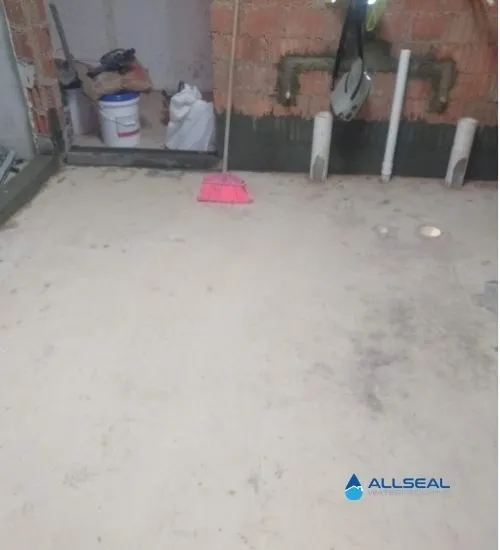
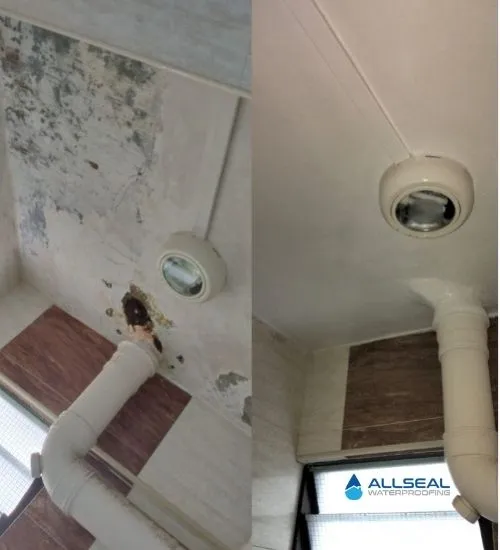
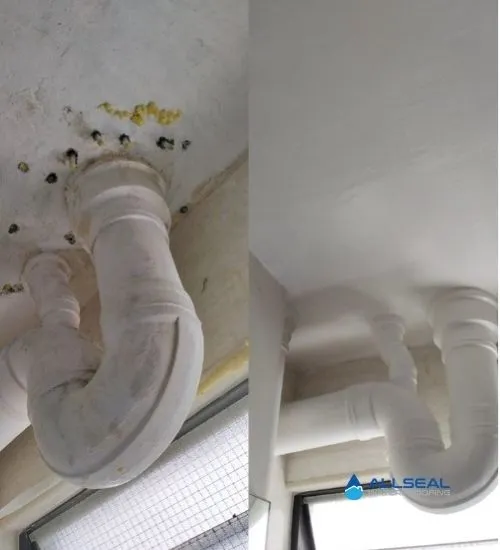
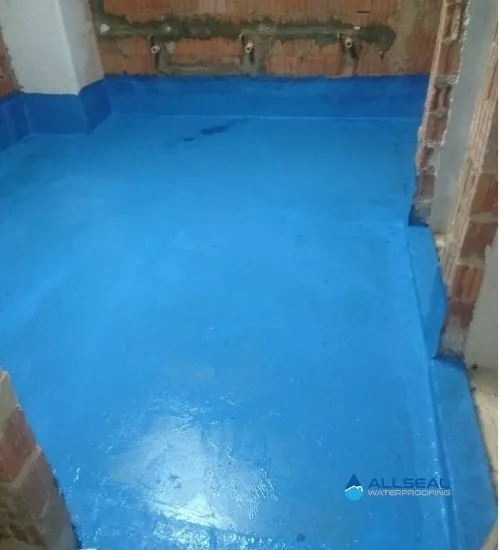
At Allseal Waterproofing PTE Ltd, our goal is to give our clients the best service possible. Here’s some feedback from our happy customers:

“I had a persistent water leak in my bathroom, and their team fixed it quickly and efficiently. They explained everything clearly and used high-quality materials. Now, my bathroom is completely dry, and I no longer worry about water damage. Highly recommend their service!”
kelvin

“I was impressed by how fast they responded to my request. The team arrived on time, found the source of the leak, and repaired it without any hassle. The pricing was fair, and they even gave me tips to prevent future leaks. Great service!”
Edmund

“They did an amazing job fixing the leak in my bathroom. The team was friendly, professional, and very knowledgeable. They took the time to ensure everything was properly sealed and tested. I will definitely call them again if I ever need plumbing repairs!”
Williams
The most common causes are an aged or damaged waterproofing membrane, cracks in the roof surface, failed joints and flashings, poorly sealed pipes and brackets, and blocked drainage that leads to ponding. Singapore’s strong sun and frequent heavy rain speed up wear on all of these. The actual cause on your roof can only be confirmed by an inspection.
Look for stains or damp patches on top-floor ceilings and upper walls, paint that bubbles or peels, drips during or after heavy rain, and mould in rooms directly under the roof. On the roof itself, cracks, torn membrane, and water that stays long after rain are warning signs. A leak that worsens with each storm is usually active.
Yes, often. If the leak comes from a defined crack, a joint, a flashing, or a pipe penetration, and the rest of the membrane is in reasonable condition, a localised repair may be enough. Full replacement is usually considered when the existing system has deteriorated across much of the roof.
Roof leakage repair fixes a specific, identified problem, such as a crack or a failed joint. Roof waterproofing applies or restores a protective system over a larger area, usually because the existing layer has aged. Some jobs combine both, with the defect repaired first and the area waterproofed afterwards.
It depends on the system, the quality of surface preparation and application, sun exposure, foot traffic, and how well the roof drains. A properly installed system on a well-drained roof lasts much longer than one that sits under ponding water. Regular checks and clearing of outlets help to extend its life.
Yes. Water entering through the roof usually shows up first on the ceiling below, as stains, bubbling paint, or crumbling plaster. Repeated wetting can also damage false ceilings and encourage mould. The roof source should be repaired first. If the ceiling problem continues afterwards, our ceiling leakage repair page explains the next steps.
A localised repair to a crack, joint, or flashing is usually a short job, while waterproofing a whole roof takes longer because of surface preparation and curing times. Rain also affects scheduling, since most systems need a dry surface. We give you an expected timeline with the written quotation.
The cost depends on the size of the affected area, the type and condition of the roof, the cause of the leak, access, and whether a local repair or a new waterproofing system is needed. Because these factors vary so much, we provide a written quotation after a free site inspection rather than a fixed price over the phone.
Most roofs can be waterproofed, but no single system suits them all. Concrete slabs, metal sheets, and tiled roofs each need different materials and detailing. The right choice depends on the roof surface, how much it moves, its exposure to sun and water, and the condition of any existing system.
Call or WhatsApp us on +65 8360 1752, or request an inspection online. Tell us your property type, where the water appears, and whether it happens during or after rain. If you can safely take photos of the roof and the stains inside, please send those as well.
If water is coming through your roof, our team will get back to you quickly to arrange a free inspection. Call or WhatsApp +65 8360 1752, or email allsealwaterproofingsg@gmail.com.
From the Allseal blog:
Fix bathroom water leakage · Hidden leak problems in HDB bathrooms · Detecting concealed pipe leaks

Allseal Waterproofing PTE Ltd, your trusted partner for all waterproofing needs. Based in Singapore, we provide expert solutions for leaks and dampness. Contact us for unparalleled service.