
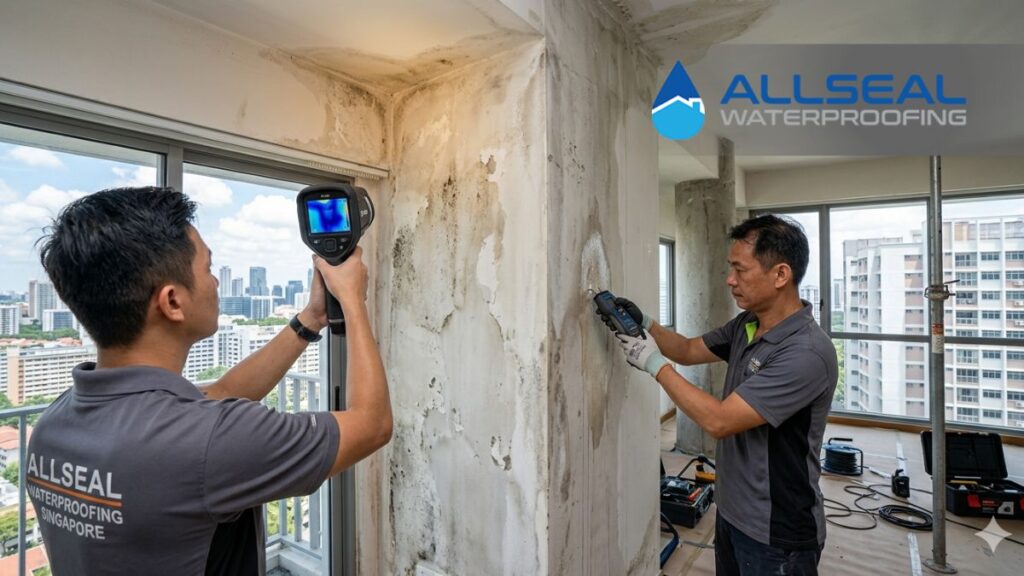
Water stains on ceilings, peeling paint, damp walls, or recurring mold problems are often signs of deeper structural water damage. In Singapore, these issues are especially common because buildings are constantly exposed to heavy rainfall, high humidity, condensation, and aging waterproofing systems.
However, experienced waterproofing specialists know that visible damage rarely reveals the true leak source. In many cases, water travels through concrete slabs, wall cavities, or waterproofing layers before appearing somewhere completely different.
That is why professional leak diagnosis today relies on advanced non-destructive inspection methods such as thermal imaging, moisture mapping, and pressure testing instead of unnecessary hacking.
At Allseal Waterproofing Singapore, specialists use systematic leak detection methods to identify the actual root cause before recommending repairs.
Why Structural Water Damage Is Common in Singapore
Singapore’s tropical climate creates ideal conditions for hidden water seepage.
Several local factors contribute to structural leakage problems:
- Frequent heavy rain exposure
- Constant humidity and condensation
- Aging HDB and condominium waterproof membranes
- Balcony ponding water
- Rooftop waterproofing deterioration
- Concealed bathroom pipe leakage
- Poor waterproofing workmanship from older renovations
In many HDB flats and condominiums, structural leakage develops slowly over months before visible symptoms appear.
By the time paint starts bubbling or ceiling stains become visible, moisture may already be spreading inside the concrete structure.
Structural Leak vs Surface Leak
One of the first things waterproofing specialists determine is whether the problem is a surface leak or a structural leak.
| Leak Type | Description | Common Signs | Severity |
| Surface Leak | Water remains near the outer surface | Minor damp spots, cracked grout, peeling paint | Lower |
| Structural Leak | Water penetrates deeper into walls, slabs, or concrete | Recurring seepage, mold, ceiling leakage, concrete deterioration | High |
Surface Leaks
Surface leaks are usually caused by:
- cracked tile grout
- failed sealant
- condensation
- minor plumbing splashes
These problems are often easier and less expensive to repair.
Structural Leaks
Structural water damage occurs when water penetrates:
- reinforced concrete slabs
- waterproofing membranes
- concealed pipe systems
- wall cavities
- roof structures
Unlike surface moisture, structural seepage continues spreading internally even when the visible area looks dry.
In Singapore properties, bathroom waterproofing failure is one of the most common causes of structural leakage.
How Waterproofing Specialists Diagnose Structural Water Damage
Professional waterproofing diagnosis is not based on guesswork. Experienced specialists follow a step-by-step inspection process to confirm the actual leak source before starting repairs.
Step 1 — Visual Inspection and Moisture Pattern Analysis
The first stage involves a detailed visual assessment.
Specialists inspect:
- ceiling water stains
- peeling paint
- mold growth
- crack patterns
- wall discoloration
- tile joint deterioration
- swollen skirting boards
The moisture pattern itself often provides important clues.
For example:
- Circular ceiling stains may indicate pipe leakage
- Vertical damp streaks may suggest rainwater seepage
- Moisture near window edges often points to façade cracks
- Widespread bathroom dampness may indicate membrane failure
In many Singapore condos, ceiling stains are not directly below the actual leak source because water can travel horizontally inside concrete slabs.
This is one reason why DIY repairs often fail.
Step 2 — Moisture Meter Testing
After the initial inspection, waterproofing specialists use moisture meters to measure internal dampness levels.
A moisture meter helps identify:
- hidden moisture behind walls
- water saturation inside concrete
- active seepage zones
- moisture spread beneath flooring
- severity of internal dampness
Unlike surface inspection alone, moisture mapping reveals how far the water has traveled internally.
This process is especially important in:
- HDB bathrooms
- condominium ceilings
- balcony slabs
- rooftop leakage cases
Why Moisture Mapping Matters
Some stains may come from old water damage rather than active leakage.
Moisture meter readings help specialists distinguish between:
- active leaks
- residual moisture
- condensation problems
- historical water damage
Without proper moisture testing, contractors may repair the wrong area entirely.
Step 3 — Thermal Imaging Leak Detection
One of the most advanced leak detection technologies used in Singapore today is thermal imaging.
What Is Thermal Imaging?
Thermal imaging uses infrared cameras to detect temperature differences caused by hidden moisture behind surfaces.
Wet materials retain temperature differently from dry materials, allowing specialists to identify concealed seepage without destructive hacking.
Thermal imaging is commonly used for:
- concealed pipe leakage
- bathroom seepage
- roof waterproofing failure
- wall seepage
- ceiling leakage
- balcony waterproofing issues
Why Thermal Imaging Is Effective
Thermal cameras can detect:
- moisture trapped beneath tiles
- hidden water movement
- damp concrete zones
- leaking pipe pathways
- failed waterproofing membranes
This technology allows specialists to narrow down the leak location before any hacking work begins.
In many Singapore apartments, thermal imaging helps reduce unnecessary demolition costs significantly.
Example: Hidden Bathroom Leak in a Singapore Condo
A condominium owner noticed bubbling paint along the bedroom wall beside the bathroom.
Initial visual inspection suggested wall seepage, but thermal imaging revealed concentrated moisture beneath the shower area.
Moisture meter testing confirmed heavy water saturation behind the tiles, while pressure testing showed stable plumbing pressure.
The actual problem was a failed bathroom waterproofing membrane rather than a broken pipe.
Without proper diagnostic testing, unnecessary pipe hacking could have been performed.
Step 4 — Pressure Testing for Concealed Pipe Leaks
If specialists suspect plumbing leakage, pressure testing is conducted.
Pressure testing checks whether water pipes can maintain stable pressure over time.
A pressure drop may indicate:
- concealed pipe cracks
- leaking pipe joints
- underground pipe leakage
- plumbing system failure
Pressure testing is commonly used in:
- bathroom leakage diagnosis
- concealed pipe inspections
- ceiling leakage investigations
- rooftop water supply systems
Why Pressure Testing Matters
Many homeowners assume every ceiling leak comes from waterproofing failure.
However, in Singapore properties, concealed plumbing leaks are also extremely common.
Pressure testing helps specialists confirm whether:
- the issue comes from plumbing
or - the problem originates from waterproofing failure
This prevents unnecessary repair work.
Common Structural Water Damage Areas in Singapore Properties
Bathrooms
Bathroom waterproofing failures are one of the leading causes of structural leakage in HDB flats and condominiums.
Common causes include:
- deteriorated waterproof membranes
- failed floor traps
- pipe penetration leakage
- cracked tile joints
Rooftops
Flat roofs in Singapore experience intense rain exposure throughout the year.
Common rooftop leakage causes:
- membrane deterioration
- ponding water
- concrete cracks
- UV weather damage
Balconies
Balconies are constantly exposed to:
- rainwater
- sunlight
- expansion and contraction
Over time, cracks develop and allow water seepage into lower units.
External Walls
Façade cracks and failed sealants often allow rainwater intrusion during storms.
This commonly causes:
- interior wall dampness
- peeling paint
- mold growth
Can Structural Leaks Be Diagnosed Without Hacking?
Modern leak detection technology significantly reduces unnecessary hacking.
Today, specialists can often identify hidden moisture using:
- thermal imaging
- moisture meters
- pressure testing
- infrared scanning
However, severe structural leakage may still require targeted hacking after the source is confirmed.
The goal is not “zero hacking.”
The goal is accurate diagnosis before repair work begins.
Signs You May Have Structural Water Damage
You should arrange a professional inspection if you notice:
- recurring ceiling stains
- bubbling paint
- damp walls
- musty odors
- mold returning repeatedly
- leaks worsening during rain
- cracked bathroom grout
- unexplained moisture near floors
- rising water bills
Early diagnosis helps protect your home from water damage and prevent:
- concrete deterioration
- mold infestation
- expensive renovation damage
- long-term structural problems
Why Professional Leak Diagnosis Is Better Than Guesswork
Many leak problems in Singapore are misdiagnosed because common signs of water seepage do not always reveal the true source.
Professional waterproofing specialists combine:
- visual inspection
- moisture mapping
- thermal imaging
- pressure testing
to confirm the actual root cause before repairs begin.
This approach:
- reduces unnecessary hacking
- lowers long-term repair costs
- prevents recurring leakage
- improves waterproofing accuracy
Final Thoughts
Structural water damage is one of the most difficult property problems to diagnose correctly. In Singapore, recurring rain exposure, humidity, and aging waterproofing systems make hidden seepage increasingly common in HDB flats, condominiums, and landed properties.
Modern waterproofing specialists now rely on advanced diagnostic methods such as thermal imaging, moisture meter testing, and pressure testing to locate hidden leaks accurately without relying on guesswork.
Accurate diagnosis is the foundation of successful waterproofing repair. Without identifying the real source of water intrusion, leakage problems often return again and again.
If you are experiencing recurring seepage, ceiling stains, or hidden dampness, when to call a waterproofing specialist becomes a critical question to help prevent more serious structural damage in the future.