
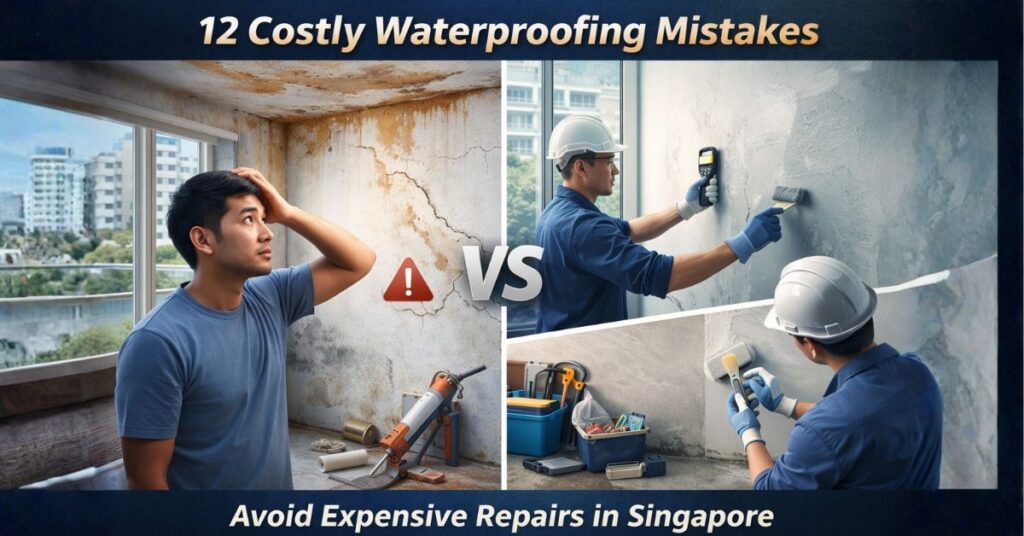
Singapore is hot, humid, and rainy almost all year round. Humidity is usually above 80 per cent, and heavy rain can fall suddenly and heavily. Because of this weather, water leaks are very common in HDB flats, condos, landed homes, and offices. To tackle these issues, there are many mistakes homeowners make before calling a waterproofing specialist in Singapore, especially when they try to solve the problem on their own.
Some people try to fix it themselves. Some delay. Some guess what the problem is. These small actions may seem harmless, but they can turn a simple leak into a bigger and more expensive repair.
Common mistakes include —
using quick DIY sealants,
ignoring early signs like small stains or musty smells,
and fixing only the visible damage instead of checking the real source.
These actions usually make the leak worse and increase the final repair cost. Let’s look at these common mistakes in detail below.
What are the Mistakes Homeowners Make Before Calling a Waterproofing Specialist in Singapore?
Let’s go through the most common mistakes homeowners make before calling a waterproofing specialist in Singapore.
1. Painting Over Water Stains
You notice a brown stain on your ceiling. It looks ugly, so you repaint it. For a few weeks, everything looks fine. Then one day, the stain comes back – darker and bigger than before.
Why? Because paint does not stop water. It only covers the mark. The water is still inside the concrete or plaster.
Over time, that trapped moisture can cause serious problems. Here are the issues you might see —
Paint starts peeling or bubbling.
Mould may grow and create a musty smell.
The concrete may begin to crack and fall off (this is called spalling).
Inside the slab, steel bars can start to rust.
When steel reinforcement rusts, it expands much bigger than its original size. This expansion pushes against the concrete and creates cracks. If ignored for too long, small cracks can become falling concrete pieces.
What looks like a small stain today could become a safety risk tomorrow. You can learn more about the common signs of water seepage in Singapore before repainting any affected area.
2. Using Hardware Store Sealants as a Permanent Fix
Many homeowners go to a hardware store and buy silicone or waterproof glue. They seal cracks around windows, balconies, or bathrooms. At first, the leak seems gone.
But after one heavy rainy season, the water comes back.
This happens because most DIY sealants are not made for long-term exposure. In Singapore, the sun is very strong. Roof surfaces can get extremely hot during the day and cool down quickly at night. This daily expansion and shrinking puts stress on materials.
Cheap sealants cannot handle this movement. They dry out, crack, or lose flexibility. If you’re unsure whether to attempt repairs yourself, consider reading about the pros and cons of DIY vs metal roof waterproofing before making a decision.
Sometimes water gets trapped underneath tiles after sealing only the surface. Later, tiles may pop up or loosen. What could have been a small repair now requires hacking and full replacement.
3. Thinking Grout is Waterproof
Many people believe that regrouting bathroom tiles will stop leakage. Grout is the white or grey material between tiles. But grout is not fully waterproof. It is slightly porous, meaning water can still pass through it slowly.
Tiles and grout are only the top layer. The real waterproofing layer is underneath the tiles. It is usually a waterproof membrane hidden below the surface.
If that membrane fails, changing grout will not solve the problem. Water will still seep through. Regrouting may make the bathroom look new, but it does not fix damage underneath. You can understand more about the reasons for bathroom waterproofing to avoid this misconception.
4. Fixing the Symptom, Not the Source
Imagine water dripping from your ceiling. You repair the ceiling patch. A few weeks later, it leaks again. Water does not always drip straight down from the source. In apartments, water can travel sideways inside the concrete slab before coming out somewhere else.
The real source could be the upstairs neighbour’s toilet, a cracked balcony, a planter box, leaking pipes inside the walls, or even window gaps. For a detailed reference, see this toilet leakage repair guide to understand how leaks are properly traced.
Without proper testing, such as moisture checks or water ponding tests, you might repair the wrong area. This wastes time and money while the real leak continues.
5. Ignoring Early Warning Signs
Leaks rarely appear suddenly. There are usually early signs:
A slight musty smell
Small hairline cracks
Tiny paint bubbles
Tiles that sound hollow when tapped
Many homeowners ignore these signs because repairs cost money. But early repairs are usually much cheaper. Once the waterproof layer fails completely, hacking and reinstalling can cost thousands. You can review the signs of water damage to act before the situation worsens.
In Singapore’s humid weather, mould can grow within one to two days in damp areas. Small problems grow quickly here. Waiting almost always makes things worse.
6. Not Understanding HDB Leakage Responsibility Rules
In HDB flats, toilet leakage often involves both upper and lower units. Some homeowners immediately blame their neighbours. Arguments start before proper testing is done.
However, HDB usually requires a joint water test to confirm where the leak comes from. Without proper inspection, disputes can drag on for months. You may read more about when to call a waterproofing specialist to avoid unnecessary delays.
A waterproofing specialist can provide a clear report. This helps identify responsibility and prevents unnecessary conflict. Understanding the process avoids stress and delays.
7. Damaging the Existing Waterproof Membrane
The waterproof membrane is hidden below your tiles. Sometimes homeowners drill into bathroom walls, install shower screens, hack tiles partially, or chip concrete to inspect leaks.
Each time this happens, the membrane may be punctured. Even a small hole can allow water to pass through during every shower. Over time, that small damage causes bigger leakage problems.
Fixing membrane damage usually means removing tiles and redoing the waterproof layer completely. In some cases, it may still be possible to fix bathroom leakage without removing floor tiles depending on the damage severity.
8. Using Harsh Chemicals to Remove Mould
Bleach and strong cleaning acids can remove mould stains quickly. The bathroom looks clean again. But repeated use of harsh chemicals can damage sealants, weaken grout, corrode metal parts, and slowly break down waterproof coatings.
Over time, cleaning products may shorten the life of your waterproofing system. Cleaning mould is important, but it should not damage the protective layers underneath.
9. Not Recording the Leak Properly
When calling a waterproofing specialist, some homeowners simply say, “It leaks sometimes.” That is not enough information. Leaks follow patterns. You have to observe the following conditions:
Do leaks happen only during heavy rain?
Only after shower use?
Only at night?
Taking photos, videos, and noting the date and time helps specialists identify the cause faster. Good records reduce guessing and speed up repair.
10. Choosing the Cheapest Contractor Without Checking Credentials
Waterproofing is technical work. It is not just applying a layer of paint-like coating. It requires proper surface preparation, moisture testing, correct product selection, and understanding of Singapore’s weather conditions.
Some cheap contractors apply very thin coatings or skip preparation steps. It may look good at first, but it fails during heavy rain. Paying less today may mean paying again next year.
Here’s how to choose the right waterproofing contractor — read this guide on how to choose the right waterproofing contractor before making your decision.
11. Assuming Waterproofing Lasts Forever
Many homeowners think that once waterproofing is done, it will last forever. In reality, waterproofing has a lifespan. Bathrooms may last around 8 to 15 years, depending on quality and usage.
Roof systems face strong sunlight and heavy rain daily. Over time, materials weaken due to UV exposure and constant expansion and contraction.
Regular inspections every few years help detect early failures before major leaks occur. You can also understand how to extend the lifespan of your property in SG with proper maintenance planning.
12. Blocking Drainage Points
Sometimes leaks happen because drains are blocked. When leaves, debris, or dirt clog drains, water cannot flow away properly. It starts pooling on the surface. Standing water increases pressure against joints and cracks. Eventually, water seeps through.
Some homeowners seal cracks but ignore drainage slope problems. If water cannot flow toward the drain, it will always collect and find a way through.
Proper drainage is also part of waterproofing. If your balcony area is affected, you may explore balcony waterproofing cost in Singapore to understand potential repair planning.
Estimated Financial Impact of Common Waterproofing Mistakes in Singapore
Costs are typical market estimates in Singapore and vary depending on flat type, access difficulty, and damage severity.
| Mistake | What Issue May Happen Later | Estimated Cost in Singapore (SGD) |
| Painting over ceiling water stains | Continued internal leakage, mould growth, and ceiling plaster damage | $200 – $1,000 (ceiling leakage repair & repainting); higher if hacking needed |
| Using cheap hardware sealants as a permanent fix | Crack reopening, balcony leakage, tile detachment | $500 – $4,500+ (balcony waterproofing & tile reinstatement) |
| Thinking grout is waterproof | Hidden membrane failure, toilet slab leakage | $800 – $3,500+ (bathroom hacking & membrane replacement) |
| Fixing the ceiling but not tracing the source | Repeated leakage, wider slab damage | $300 – $1,500 per crack (PU/epoxy injection); more if slab repair required |
| Ignoring early hairline cracks | Concrete spalling, exposed reinforcement repair | $3,000 – $10,000+ (structural concrete repair) |
| Damaging the waterproof membrane during drilling | Full toilet membrane failure | $1,500 – $4,000+ (full toilet hacking & waterproof redo) |
| Blocking drainage points | Water ponding, seepage through joints | $800 – $5,000+ (water damage restoration & drying works) |
| Choosing the cheapest contractor (thin coating only) | Early membrane failure within 1–2 years | $1,800 – $3,500+ (roof re-waterproofing) |
What Homeowners Should Do Instead to Avoid These Mistakes
Water leaks often start small – a stain, a crack, or a slight musty smell. Many homeowners react quickly to hide the problem, not solve it. That is where bigger damage begins.
To avoid unnecessary cost, stress, and repeated repairs, here are the correct steps homeowners should take instead.
- Do Not Paint Over Damp Areas First – Check the Source
- Do Not Apply Random Sealant – Understand the Root Cause
- Do Not Accuse Neighbours Without Proper Testing
- Do Not Delay Inspection – Act Early
- Document Everything Clearly
- Get a Professional Assessment Early
Professional leak detection uses proper tools. It avoids guesswork. It prevents unnecessary hacking.
Stop Water Leakage Early with a Trusted Waterproofing Specialist in Singapore
Water leakage in Singapore spreads quickly due to constant humidity and heavy rainfall. The longer you wait or rely on temporary fixes, the more hidden damage builds up inside walls, ceilings, and concrete slabs.
Since 2014, Allseal Waterproofing PTE Ltd has helped homeowners and businesses resolve leaks properly using advanced no-hacking solutions, precise leak detection methods, and long-lasting waterproofing systems designed for Singapore’s climate.
If you notice ceiling stains, damp smells, wall seepage, balcony water pooling, or bathroom leakage, speak to a trusted waterproofing specialist in Singapore today.
Call +65 8360 1752 to get a quote and arrange a site survey to protect your property before minor damage becomes a major repair cost.
Wrapping Up
So, to sum it up, water leaks usually start small, but they rarely stay small. Many problems become expensive because of simple early decisions like repainting, sealing cracks randomly, or waiting too long to check properly.
Understanding the mistakes homeowners make before calling a waterproofing specialist helps you avoid bigger trouble later. When you act early, test properly, and get professional advice, you protect your home, your budget, and your peace of mind.
FAQs
How do I know if I need a waterproofing specialist or just a plumber?
If the leak comes from a pipe, a plumber can fix it. But if water seeps through walls, ceilings, balconies, or slabs, you likely need a waterproofing specialist. A proper inspection helps you avoid fixing the wrong problem.
Is waterproofing work always very expensive?
Not always. Early repairs usually cost much less. The price becomes high only when damage spreads, and hacking is needed. Acting early often saves a lot of money.
Will insurance cover water leakage repairs?
It depends on your policy. Some plans cover sudden pipe leaks but not long-term seepage. It is always better to check your policy details and speak to your insurer early.
How long does waterproofing usually last?
Waterproofing does not last forever. Bathrooms may last many years if done properly. Roofs and balconies face the sun and rain daily, so they may wear out faster. Regular checks help you catch problems early. You may also refer to how long bathroom waterproofing takes for additional clarity.
What happens during a site inspection?
The specialist will check the affected area carefully. They may use tools to test moisture or perform water tests. They try to find the real source before suggesting any repair. This avoids unnecessary hacking.
Is hacking always required to fix leaks?
Not always. Some leaks can be repaired using no hacking methods. But if the waterproof layer is badly damaged, hacking may be necessary. Proper diagnosis helps decide the right method.